
HAPPY MOTHER'S DAY
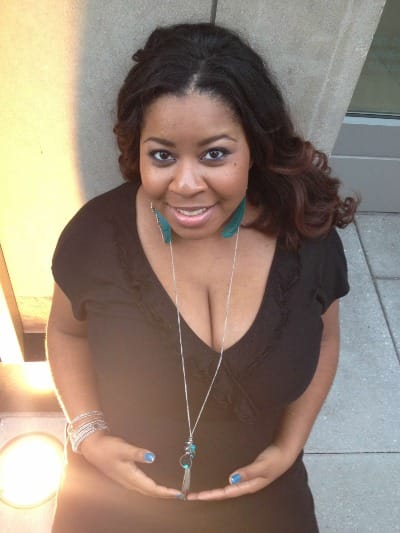
"I'm convinced that we Black women possess a special indestructible strength that allows us to not only get down, but to get up, to get through, and to get over." – Janet Jackson
To the mothers. The mother-adjacent. The aunties, bonus moms, grandmothers, and caregivers who mother without the title. To the women who've experienced miscarriage or loss and are navigating grief on a day that celebrates what they're mourning. To the women who wanted to be mothers but couldn't. To the women still trying to conceive. To the women forced into motherhood because that exists too. To the women who chose not to be mothers for whatever reason and are tired of explaining that choice.
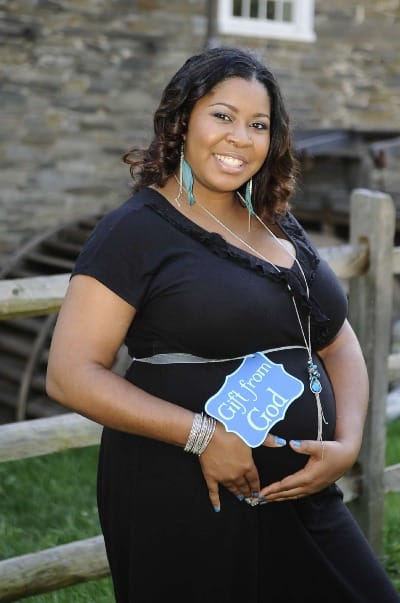
And to myself, a mother who has never written publicly about my birth experience, about what it means to carry life, to bring it into the world, and to navigate a system that celebrates our strength while ignoring what that strength costs our bodies. Happy Mother's Day.
Today, I'm writing what I've never said out loud.
BECOMING MAMA: BEAUTIFUL AND SCARY
I became a mother at 30.
I recall learning I was pregnant after attending the ACPA Conference in 2013. My body knew before my mind caught up. I was fortunate. I was married. We wanted to conceive. We’d been married for 5 years. I'd discontinued birth control months earlier, having detailed conversations with my gynecologist at the time, an amazing black man who is now retired, and fortunately, my body cooperated quickly. The privilege of that is not lost on me. I know too many women for whom conception and birth are a years-long struggle, a heartbreak renewed every month. Learn more about Birthing Justice.
My birth experience was both beautiful and scary. Beautiful because if you know me, you know I crafted each piece meticulously and curated a village of experts. I do not believe in doing things alone. Yet scary because of the unknowns, and at that time, activating my throat chakra to advocate to my then partner and my family, specifically my two mothers, about what I knew was about to be different from what others experienced. Everyone had something to say about others’ reproductive justice.
I’d recently seen Ricki Lake’s documentary, The Business of Being Born, which inspired me to imagine a different way to deliver my child from what I’d seen through family, friends, or TV - Baby Mama, anyone? No, I wanted education. I also wanted a way that felt good to my mind, body, and soul. Becoming pregnant required a new level of consciousness. One that considered the impact of my life and decisions on this fetus and their long-term health and development. One that required a village beyond, yet in addition to, my family and friends.
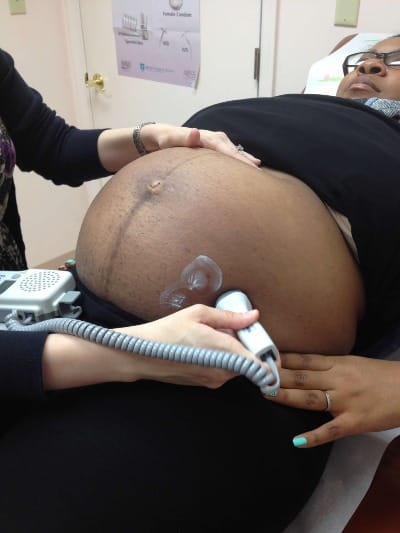
We paid out of pocket for a doula, choosing Mamatoto Village, a business founded by a fellow Temple University graduate, Dr. Aza Nedhari. I met them while attending the inaugural DC Birth and Babies Fair, only 4 weeks after learning I was pregnant. Talk about intentional research. After learning I was pregnant, I switched from my male gynecologist to the now-defunct birth cooperative, Special Beginnings. My doulas, Aza and Cassie, were consulted after each midwife appointment, during which they required me to maintain honesty and transparency in my habits and to follow through on my actions by adjusting anything that impacted my ideal birth plan. Halfway through pregnancy, we interviewed pediatricians before deciding on Dr. Yvonne Jackson of Love Kids, LLC.
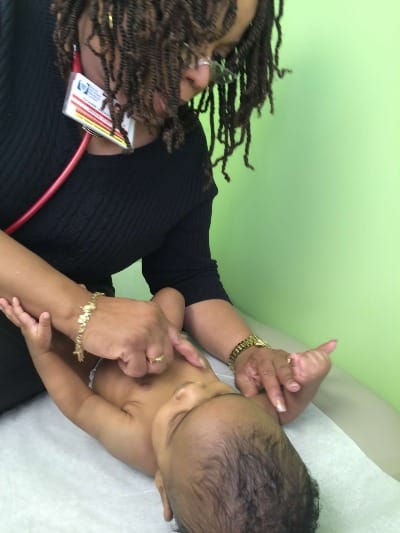
The birth and recovery were successful. I had three months of paid FMLA to transition into motherhood, given my 5-year tenure with my then-employer, where I, as a millennial, rarely use leave. As an HR major, I put in place practices that allowed me to enjoy my maternity break, knowing that I could, and that my new students were well taken care of, breastfeeding, and balance the exhaustion everyone tells you about, yet that doesn’t seem to be something one can adequately prepare for.
I recall submitting my first dissertation proposal a few days before my son's birth. Let that sink in. A few days before bringing a human into the world, I was working on my doctoral research. That tells you how long I've been on this struggle bus that I'm almost, finally, off. I remember having so much energy after my son was born. So much drive. I also remember slowly losing myself to advocate so hard for someone else. And, so much internalized messaging that rest was weakness. I also had a partner who, after the requisite womb healing period, I could not get into the flow of sex and intimacy with. I remember that too.
That tells you how deeply we've been conditioned to perform at a level of productivity, even when our bodies are literally creating life, and how that experience can shift your world. Mind. Body. And, soul.
THE VILLAGE THAT HELD ME
Dr. Shenelle Wilson, Urologist and Founder of The Orgasmic Clinic, said something profound during our conversation last Monday that I haven't stopped thinking about: "There is so much taboo around this [sex] concept in which the people who surround us are here because of."
Because of women with wombs.
Because of sperm.
Because of pleasure, connection, and maybe orgasms.
Because of forced pleasure.
Because of the bodies that carried, labored, and brought forth life.
Because of birth.
When I reflection about being a mom, the privilege and honor of birthing and parenting this amazing young man is not lost on me. In fact, this leads me to think about the expanded village that also held me during this season.
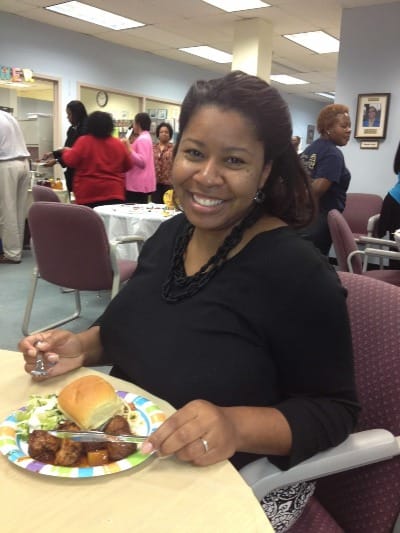
I had an amazing supervisor and office assistant who helped me curate a department continuity plan to ensure our first-year students didn't miss a beat during orientation. I had a coworker who held down my role as Orientation Coordinator while I was on leave. I had colleagues who threw me a surprise baby shower at work. I had colleagues who supported me when I had excruciating Braxton Hicks one day in between two back-to-back orientation sessions, which finally made me slow down regarding work, and they filled in.
To my mom, who took care of me and babied me to the end (and still babies me if I can be perfectly honest), and was the caregiver for my son for his first year, and to my mother-in-law, aunties, and my bestie, who also took care of my family and me, I say thank you. I give you so much love to each and every one of you. I am grateful that I was able to stave off daycare for that first year, which kept my son's health well.
THE MOMENTS & MOTHERS WE DON'T SEE
When the daycare period began, my sunshine was prone to one illness after another. I felt so overwhelmed to always be the first person called, the first to respond when he was stung by a wasp and had a horrible allergic reaction, when his grass allergies flared (because of course he loves the one thing we learned he's allergic to - no thanks to the impacts of Botanical Sexism in Maryland), when coughs and sniffles kept him home.
Commuting him to daycare required getting up 30 minutes earlier to navigate a 45-minute drive on 495. During orientation season, when I needed to prep early, we'd get up even earlier so he could accompany me to work to prep before the college and daycare opened.
What about the way our bodies shift? Every part of my body expanded to give space to him and even as I age, my body continues to change and shift. Hair is growing in places and the grey hairs ya'll.
What about the mothers who experience miscarriage or loss? Where is the support for them as they grieve an anticipated experience or mourn the death of their children?
I've witnessed coworkers and leaders in the midst of work go numb as they return to jobs that feel required to live, yet their homes feel empty because their hearts are broken or their lives feel unbalanced. But they show up. They perform. They carry on. Because that's what we do?!
Yet, carrying these emotions, such as grief, stress, and strength behind ambition, meeting expectations, and the weight of being strong, has a cost. And that cost shows up in our hearts. Literally. To those mothers - I see you.
CARDIOVASCULAR DISEASE: WHAT OUR HEARTS CARRY
In a previous post, I wrote about the life-and-death stakes of health disparities for women of color—how weathering ages our bodies 7.5 years faster than white peers, how maternal mortality rates are 2.5 times higher for Black women regardless of education, how gendered racism literally gets under our skin. If you haven't read that piece yet, start there. The research is sobering. The connection between systemic oppression and our bodies is undeniable.
What happens to mothers specifically when we add workplace stress, caregiving demands, and expectations for strength and professionalism on top of weathering?
Cardiovascular disease, a condition impacting the heart, the center of our energetic and physical vitality, ranks among the top five causes of death for women, especially women of color. But for mothers navigating professional careers, the risk intensifies in ways research is only beginning to name.
The Maternal-Professional Paradox
According to Wade and colleagues in their 2025 study “She’s Always Made Sure That We Had Black Doctors, Particularly Women Doctors If We Could… and How It Can Sometimes Be the Difference Between Life and Death.” Black College Women’s Reflections On Medical Racism As a Social Determinant of Health, high-achieving women of color with graduate degrees often face higher odds of postpartum cardiovascular issues than low-income white women. This is in addition to what we eat and how much we exercise. This begins with what our bodies endure when we return to work after giving birth. When we're pumping in bathroom stalls between meetings, when we're performing competence on three hours of sleep, when we're managing the guilt of leaving our children while simultaneously proving we're still committed to our careers.
The Cost of High-Effort Coping
There's a term for the prolonged, high-effort coping strategy many of us deploy to survive: John Henryism.
Named after the folk hero who worked himself to death trying to outpace a machine, John Henryism reflects determination. This constant performance and professionalism tethered to the Strong Black Woman (SBW) archetype, where we suppress emotion, hide vulnerability, and "make a way out of no way," leads to cardiovascular consequences. By wearing this mask, we engage in what scholars call “a culture of dissemblance,” the intentional hiding of our struggles to protect ourselves in spaces that punish our humanity.
This compromises our literal hearts. High levels of occupational burnout are linked to dangerous increases in blood cortisol levels and cardiovascular disorders.We are working ourselves to death trying to prove we belong in spaces that were never designed for us.When we're trapped in hyper-performance mode, our bodies exist in a state of chronic mobilization (fight or flight) or immobilization (freeze/dissociation). This state is designed for survival, not connection - to our children, family, spouses, yet somehow we continue to show up for work.
Translation: When you're in survival mode at work, your body literally shuts down access to desire.
You come home exhausted. You have nothing left for your partner. You have not given to yourself. Intimacy feels like another task. Your libido has disappeared, and you don't know why.
It's not you. It's your nervous system doing exactly what it was designed to do: keep you alive.
We cannot live full, embodied, pleasurable lives while simultaneously performing the invulnerability required to survive racist, sexist workplace systems.Our bodies are keeping score. And the cost shows up in our hearts—physically and energetically.
WHAT DOES THIS HAVE TO DO WITH SEX COACHING?
Everything.
The things mothers do to manage work stress, the chronic activation of our nervous systems, the performance of competence while our bodies break down. People often don't see it. But the body knows.
I don't think I knew how to have these conversations with my own mothers, who often saw the way I parented differently from the way they parented—for better or for worse. Generational silence around our bodies, our stress, our sexuality, our needs meant we didn't have language for what we were carrying.
What does this mean for new mothers and mothers who allow our bodies to tolerate, operate in silence, "make a way out of no way"? What does it mean when we've been socialized to see rest as weakness, pleasure as selfish, and our own needs as secondary to everyone else's?
It means our libido disappears. It means intimacy feels like one more thing on the to-do list. It means our bodies shut down because survival mode and desire cannot coexist.
Sex coaching isn't just about better orgasms or "spicing up your sex life." It's about reconnecting to your body after years of abandoning it to meet everyone else's needs.
It's about:
- Learning that your nervous system needs regulation before your body can access pleasure
- Understanding that chronic stress literally suppresses desire
- Recognizing that the "strength" we've been praised for is often dissociation dressed up as resilience
- Practicing embodied consent—learning to recognize your body's "yes," "no," and "maybe" signals after years of overriding them
- Reclaiming pleasure as a birthright, not a reward for productivity
This is where sex coaching, somatic practices, and embodied consent education enter. When we practice coming home to our bodies—through breathwork, pleasure mapping, consent negotiation, nervous system regulation—we interrupt the chronic stress patterns that are literally shortening our lives.
REPRODUCTIVE JUSTICE IS SEXUAL HEALTH JUSTICE
Last Monday, the Supreme Court restored access to the abortion pill Mifepristone. Regardless of what side of the political spectrum you're on, I have to ask: why are courts inflicting their opinions on women's reproductive capabilities?
Why are we still fighting for bodily autonomy in 2026? Why is access to healthcare—including sexual and reproductive healthcare, as well as comprehensive sex education—gatekept instead of guaranteed?
Reproductive justice isn't just about abortion access or birth control. It's also about:
- The right to have children, or not
- The right to parent children in safe and sustainable communities
- Bodily sovereignty—the ability to access necessary resources to make informed, autonomous decisions about your own body without institutional interference, coercion, or punishment
And sexual health is central to that sovereignty.
Organizations like SisterSong, the National Women of Color Reproductive Justice Collective, understand this connection. Their seventh national Let's Talk About Sex! (LTAS) conference happening August 6-9, 2026, in Chicago centers the needs, experiences, and leadership of communities historically pushed to the margins, BIPOC folks, LGBTQ+ individuals, gender non-conforming people, those living with disabilities, and youth leaders.SisterSong's mission is clear: our silos will not save us. Reproductive justice, sexual health education, workplace equity, mental health access, and economic justice are interconnected. We cannot address one without addressing all.
The conference description puts it beautifully: "At LTAS, our joy is as much of a non-negotiable as our political education and actions."
Joy. Pleasure. Embodiment. These are not distractions from the work. They are the work.
TO THE MOTHERS: YOU DESERVE MORE THAN SURVIVAL
On this Mother's Day, I want to say what I wish someone had said to me when I was submitting a dissertation proposal days before giving birth, when I was waking up at 5 AM to commute my son to daycare before prepping orientation sessions, when I was performing strength while my body begged for rest:
You are allowed to rest.
Your pleasure matters.
Your needs are not secondary.
You deserve care, not just caregiving.
Your body is not a machine designed to produce and perform endlessly.
Janet Jackson said we possess a special, indestructible strength. But I want us to ask: what if we didn't have to be indestructible?
What if we were allowed to be soft? Tired? In need? What if our worth wasn't measured by how much we could carry?
What if pleasure, embodied, unapologetic, sovereign pleasure, was our birthright, not something we earn after everyone else's needs are met?
WHAT SEX COACHING OFFERS MOTHERS
Through ArchitectHER Pursuite℠, I guide professional women, many of whom are mothers, through:
- Reconnecting to your body after years of prioritizing everyone else
- Learning somatic practices to regulate your nervous system
- Practicing embodied consent to recognize your body's signals, not just performing availability
- Reclaiming pleasure as sacred, not transactional
This isn't therapy. It's education, embodiment, and reclamation.Because you deserve more than survival. You deserve sovereignty.
TAKE THE NEXT STEP
If this resonates:
Subscribe to the ArchitectHER Pursuite℠ newsletter for monthly reflections on pleasure, embodiment, and sovereignty, from the body to the bedroom to the boardroom.
Schedule a Discovery Call to explore how sex coaching, consent education, career strategy, or platonic touch therapy aligns with where you are right now. No pressure. Just possibility.
Learn more about my work ArchitectHER Pursuite℠
Happy Mother's Day. To the mothers carrying too much. To the mothers who've lost. To the mothers navigating systems that celebrate your strength while ignoring the costs. Your pleasure is your birthright. Your body is wise. Your sovereignty is non-negotiable. Let's architect your luminous well-being—together.